Monday, October 27, 2014

Listening to Dr. King's Advice!

I helped Dr. Dorothy Height to her seat and stood around looking for a place to sit and see what was next. It was a special night and through some strange circumstance I was part of it. It was a small dinner get together at the office of Mrs. Nana Konadu Agyman Rawlings, the First Lady of the Republic of Ghana, the guests were Mrs. Coretta Scott King, the wife of the late slain American civil rights leader Dr. Martin Luther King Jr, Dr. Dorothy Height, a prominent leader of America's civil rights movement, Alexis Herman, Secretary of Labor in the Clinton Administration, amongst others. They were all in Ghana, to attend the 1999 African- African-American summit being held in Accra, Ghana. I was at this dinner because the US Ambassador to Ghana at the time, Katherine Dee Robinson, had asked some of us Peace Corps volunteers to help out during this summit. I was one of the chosen few! Ambassador Robinson, was from the American southern State of Tennessee. She possessed the southern hospitality, wonderful southern accent, and the diplomatic touch of connecting with people.
My main responsibility for that day was pushing Dr. Height’s wheelchair!  I took my place and after a few minutes dinner was served, which included some Ghanaian and non-Ghanaian dishes. I remember slices of Kenkey on a plate. Kenkey, a Ghanaian dish, is usually served in a ball form and eaten with your hand, but I guess because of the American guests, it was sliced and was eaten with a fork! I was the only one who ate the Kenkey.

I remember it being a quiet night, and Mrs. Rawlings doing most of the talking as she was trying to engage her guests and be a good host.

The other thing that stayed on my mind was the irony of history, that Mrs. King would be coming to Ghana and interacting with an American Ambassador that is from Tennessee, a state where, her husband, Dr. King, gave his last speech and was killed on the 4th April, 1968.


I often listen to that speech, usually referred to as, “I have been to the Mountain Top” speech, which was given a day before his assassination. In the speech, Dr. King talks about history, man’s struggle for freedom, a bit about his life and his own eventual end. The reason he was in Tennessee was to support the strike of sanitation workers in the city of Memphis.

We live in a world where everyday we face crisis, whether it is diseases such as ebola or security issues related to terrorism, wars or the migration/refugee crisis. There is a global debate about how much the international community must do. Some say only those who are effected by these crisis must deal with it and there are those who believe that these crisis effect us all and we must work together to address them and final solutions to them. 

I decided to go back and revisit the speech of Dr. King given more than 45 years ago. In one part he talks about the time he and Mrs. King, drove from Jerusalem to Jericho and he was reminded of the story of the Good Samaritan, and ties it to helping the sanitation workers;

“…That's a dangerous road [the road from Jerusalem to Jericho]. In the days of Jesus it came to be known as the "Bloody Pass." And you know, it's possible that the priest and the Levite looked over that man on the ground and wondered if the robbers were still around. Or it's possible that they felt that the man on the ground was merely faking. And he was acting like he had been robbed and hurt, in order to seize them over there, lure them there for quick and easy seizure. And so the first question that the Levite asked was, "If I stop to help this man, what will happen to me?" But then the Good Samaritan came by. And he reversed the question: "If I do not stop to help this man, what will happen to him?" That's the question before you tonight…The question is not, "If I stop to help this man in need, what will happen to me?" "If I do not stop to help the sanitation workers, what will happen to them?" That's the question”.

And taking the advice from Dr. King, the international community needs to reverse the question from, “If I stop to help the communities in crisis,what will happen to me?" to "If I do not stop to help the victim of war, the ebola patient or the refugees, what will happen to them?"

He further admonished his audience, “Let us rise up tonight with a greater readiness. Let us stand with a greater determination. And let us move on in these powerful days, these days of challenge…”

Fifteen years after that dinner with all the shakers and movers of their time, here I am sitting  back in Accra, eating a  ball of Kenkey, fried fish with pepper and wondering whether the international community will be the Levite or the Good Samaritan!

Thursday, October 2, 2014

Calling for Global Moratorium on Acts of Corruption!


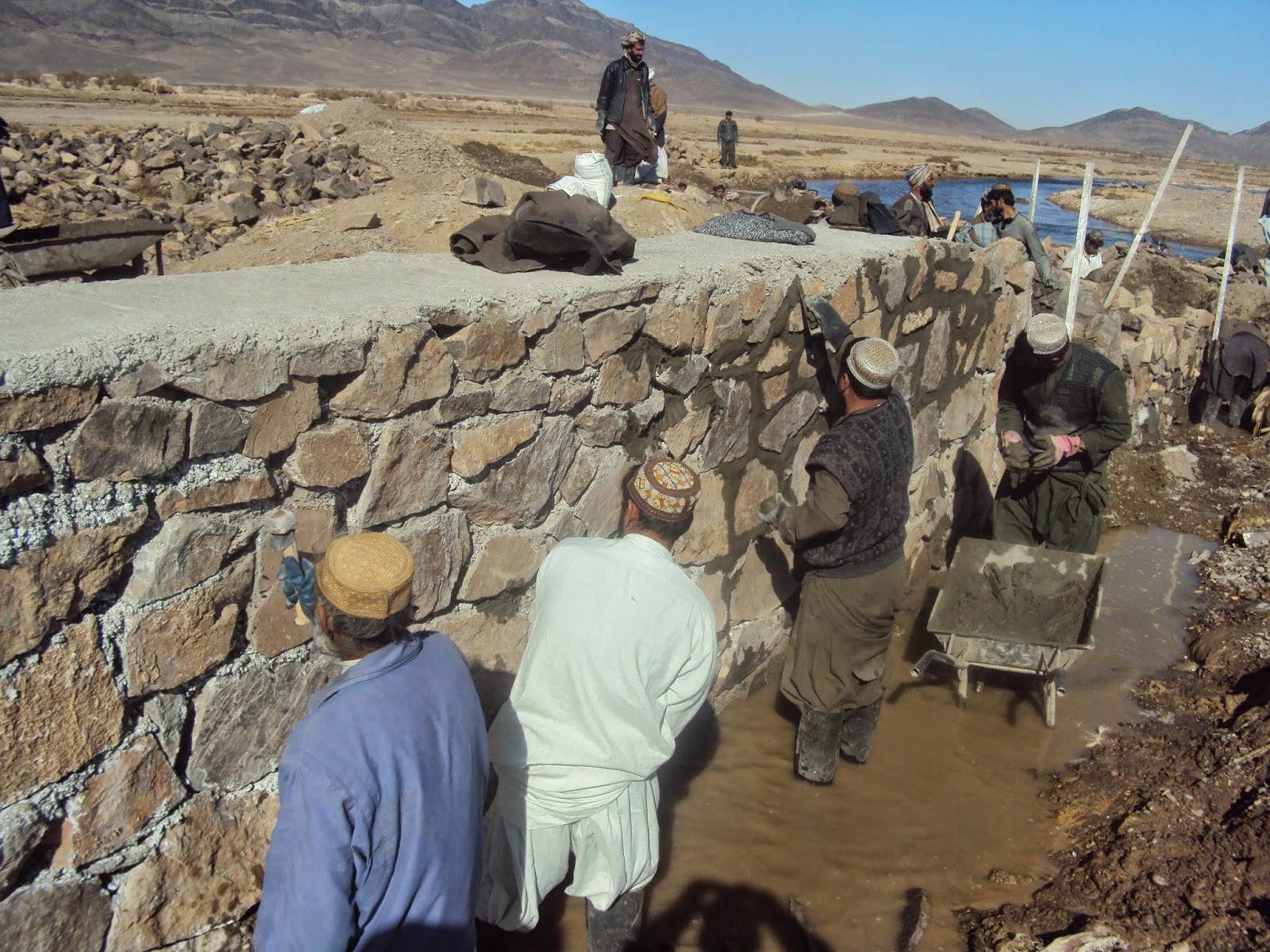
It looked like a perfectly constructed water storage tower, it was funded by the international community and executed by the village Community Development Councils (CDCs) who were entrusted by their people to carry out their development priorities. Jambaran is a village located near the Shindand Airbase, its population is made up of the traditional landowners and sheep and goat herders. Jambaran was also known for being a place where rockets were launched by insurgence towards the airbase. The day I went to visit the village, I met with the village elders and as we sipped on the traditional Afghan green tea, they told me about a certain person who as the head of their CDC, had taken the funds from the National Solidarity Program (NSP) (as the name of the program was called) and split the money with his friends. They added that the CDC had put up a water tower which looked great from far but was nothing but a façade. The purpose of the water tower was to carry water directly to people’s houses. The only problem with Jambaran’s water tower was it did not have a generator to pump the water to the tower or the pipes to send it to the people’s home!!  

Of all the programs in Afghanistan, NSP was probably one of the best, because of its truly grass-roots focus. Based on the population and size of communities, each community would elect its CDC and come up with a project to do for their community. Again based on the size of the population, you either got 30 thousand or 60 thousand dollars. Unfortunately, that selection process became the starting point of corruption, because suddenly villages with population of 100 became 1000 and villages that had 10 houses now had 100 houses in them and they were divided into 2 villages!! You could change the size of the population and the size of your village by having the district government authorities, sign documents to show the implementing partners (those entrusted by the international community to carry out this project!) that your village had 1000 families and that you had 100 homes in them! Things would get interesting from there because after you were approved, the phone calls would start coming in…it was not to congratulate your village for the resources that you had received but rather for you as the member of the CDC to share a percentage of the fund with the person on the other side of the line! It started with local Afghan government official, then after agreeing to give him something (after all he had signed your paper work to increase the fund you received!), then the phone would ring again and it was the local Afghan insurgent who would threaten you in giving him something or else!! after him, it was the criminals and then your own members of the CDC discussing ways to get a piece of the action!!! After that the workers of the implementing partners would come in and question the wisdom of you not utilizing the opportunity to get rich quickly! “come on, really, let’s find the village that has the water tower take a few pictures and show the folks in Kabul, Herat or wherever they are and tell them the project is done, take the money and….hey don’t worry I’ll take care of that!”


Corruption in Afghanistan and throughout the world brings the worst in people, but more importantly wastes resources that can be used to build good roads, bring power, health, education and many other goods for the betterment of society. It allows for rivers to get polluted, building to collapse, and become a recruiting tool to for extremists to pull people towards violence.
I just wish that for one year all governments would call a “Moratorium on Acts of Corruption”. Perhaps led by the Afghan government! The statement to be signed by all the Leaders of the World would say something to this effective, “Because of the suffering caused by corruption, on our population and population around the world, and because corruption destroys communities and the chance for both the present and the future generations to live in peace and dignity, we call upon all our government ministries, officials, leaders and civil servants to refuse to participate directly or indirectly in any activity that includes actions that enhances corruption and waste resources allocated for the betterment of our people, society and the world. This “Moratorium on Acts of Corruption” will last for one year after which officials can go back to the status quo, should they wish to do so!

I don’t know how the leaders of the world think about my idea but I can tell you I would get lots of support from the people of Jambaran!

Wednesday, September 24, 2014

To Ensure Success in Afghanistan focus on Rural Afghans!


Over the past three decades the world has witnessed constant strife, war and violence in Afghanistan, the consequences of which we witness daily on our TV screens (when there is news about Afghanistan). News out of Afghanistan seems to always be about a corrupt government and violent insurgents who are vying for the support (by force or by choice) of a people who are caught in between unsure about their future and short on hope.


Despite the good intentions of the international community, the effort to develop Afghanistan and rebuild it has fallen short. Billions have come to Afghanistan and been squandered away through waste, corruption and apathy. Leaving many, both Afghan and non-Afghans, to ponder whether there is something fundamentally wrong with this ancient land.
There is little fate that Afghanistan will become the country the international community tried so hard to help it to be. This comes after the sacrifice of blood and treasure spend over a decade.
Myriads of writers and analysts have documented the waste of resources in Afghanistan which has lead to corruption of government, fueling of the insurgency and frustration of its citizens. 
Against this bleak background, the question that many are asking is, “Will Afghanistan ever recover and more important is it worth our continued support?”
Since of the start of Operation Enduring Freedom in 2001, steady progress has been made in terms of health, education and infrastructure. If compared to the dark days of the Taliban, we can consider development in Afghanistan a success but if we compare development in accordance to the money and expertise spend to improve the Afghan lives then a fair assessment is that we have fallen short.

Why have we fallen short?
Simply put development in Afghanistan has been ineffective because the average Afghan citizen has not been involved in the process.  Development programming focused on two parts of the Afghan reality, namely the government elites and the insurgents. Development programs has been used to bolster the government and weakened the insurgency. This approached has not succeeded since the money usually ends up in the pockets of government and government-related elites or in the hands of insurgents who use it to support their anti-government activities. Development money has in fact become the fuel to fan instability in Afghanistan. While the two groups vie for the resources, caught in the middle are average men, women and children of Afghanistan, who either have to join the corrupt ways of the government or join in the violence of the insurgence. 
After the Talibans fell many Afghans believed that with a new government and the commitment from the international community their country would see an era of peace and growth, an era which they would see changes in their lives and their communities. Many are still waiting.


But as we look to the end of this decade, there is still a chance to get it right. Focusing on the rural communities where majority of Afghans live and developing them would go a long way to bring the promise of a better life to the most neglected of Afghan communities, and using classic grassroots efforts make a long-term change in this long-suffering nation. Lets not abandon Afghanistan, remember the admonishment of the great Afghan poet, Rahman Baba;

Make your path straight now, by the bright light of day;
For pitch darkness will come without warning!

Now is the time...

Saturday, September 20, 2014

Living in Ghana: The Gateway to Africa.

When you tell people that you live in Africa, they want to know if you have seen elephants and giraffes! Yes, there is animals and there is lots of great safaris you can pay thousands of dollars to come and see. Here in Ghana too there is a national park that has animals people like to see including elephants! It’s called Mole National Park and it’s located in northern part of the country.


Ghana is like most countries on this planet. It is made up of several urban centers like Accra, Kumasi, Tamale, Takaradi, Cape Coast and Bolgatanga. There are rich people, poor people, there are malls, local markets, street peddlers, there are BMWs, Toyotas, taxis and mini-buses and people walking. And yes, there are also villages and small mud huts. There are paved roads and some very good and very bad side roads. There is electricity and there are power cuts too. There are lawyers, doctors, engineers, farmers, and every other employment you can think of. No not every Ghanaian and African is a wood carver and plays the drums! FYI, Accra even has three Turkish restaurants. I hope you are getting the picture! 

The things that I like about Ghana are the friendly people, the culture, the weather (it never snows!), the food, and most importantly people look out for you when you are part of their community.

I know some of you are still wondering about whether I have seen elephants, I have yet to see an elephant but I did have an encounter with a much, much, smaller species while living in Namoo, in rural Ghana as a Peace Corps Volunteer…and here is the story…   


It was 14th of February 1999 around 2am, when I was awakened by my landlord Mr. Tony to come and watch the Oscar De La Hoya-Ike Quartey live from Las Vegas! Being half awake and half asleep, I put my leg down looking for my slippers which I found but before I could wear them I felt a sharp sting on the bottom of my foot, I took my flash light and saw a scorpion running away!!! I had step on a scorpion…so what do I do now? Call 911! Go to the non-functioning clinic? Is this my end? It’s been a good life, at least I died trying to make the world a better place! Though the thought of death crossed my mind, I had bigger problems to deal with! How would I go and tell Mr. Tony that I needed medical help. Mr. Tony did not like to be disturbed when watching a boxing match….And especially now that a Ghanaian fighter was involved. I mustered up the courage after saying a few prayers and walked to Mr. Tony and told him what had happened…Mr. Tony quickly mobilized the family and asked everyone to go look for medicine. He gave me a black stone to put on the bite and told Azanpoka, one of my mothers to apply a local medicine on my foot….I had no idea what it was but I said if it works for the Ghanaians it will work for me too!! That night I survived two near death experience one was the scorpion sting and the other disturbing Mr. Tony during a boxing match.

As the sun came up that day my pain subsided and I got throngs of people who came to see me, having heard that Anamoo (my local name) has been stung by a scorpion! There was no phones and yet the whole area had heard the news! Don’t underestimate the power of the LNN (Local News Network)

I survived the scorpion sting, and now my only wish is to see an elephant!

Friday, September 19, 2014

Geography, Diversity and Jamaica!


“Can someone tell me the capital city of Jamaica?”, “Sir, is it King-Stone?” I replied. Our geography teacher replied, “No, but you are close, its Kingston!” This was my 7th grade history and geography teacher, Mr. D’Silva. He was one of my favorite teachers, his teaching style was exceptionally interactive and creative, specially for the India of the early 1980s. That day I learned that Kingston was the capital of Jamaica, and later found out that Michael Holding, Bob Marley and Michael Manley were all Jamaicans. 

One of the most important subjects we were taught as youngsters was geography. There is nothing that creates connection between two people than when you indicate to the other person you know where he or she is from. It’s often surprising to find out how ignorant people are about where other people live or where they come from. There are politicians, despite the many resources at their disposal don’t know the difference between Iran and Iraq or that Africa is a continent not a country, that Thailand is no longer called Siam and Aleppo is in Syria!

Our world has changed dramatically, with the constant movement of people either travelling, fleeing or migrating to new regions. This movement of people has brought change to places which for years were homogeneous.  Our uni-dimensional lingo has changed, we now have global village, diversity, interdependence, interconnectedness, and many more to indicate this change but yet we still lag behind when it comes to the appreciation of this colossal demographic and cultural evolution. A Jamaican who now lives in Northern Ireland, has to deal with a brick coming through her window, because there are many who have yet to understand, that yes, there are Irish of Jamaican or even Chinese descent who are now part of Northern Ireland.      

The shaping of this global understanding must start at a young age, where children in school are  taught geography that at least teaches them where countries and people are located in relation to themselves. This hopefully will be the first step towards a wider understanding of the global community and their relationship to it, whether they live in America, Ghana, Bahrain, Japan or Jamaica.
Now in 2017 and many years after learning where Jamaica and its capital are located, I am reminded of what Bob Marley, the great Jamaican Reggae singer, sang so many years ago and perhaps underlining the challenge that the global community faces today;

“Until the philosophy which hold one race superior and another Inferior Is finally and permanently discredited And abandoned…That until there is no longer, first class and second class citizens of any nation, until the color of a man's skin is of no more significance than the color of his eyes…Until that day the dream of lasting peace, world citizenship, rule of international morality, will remain in but a fleeting illusion to be pursued, but never attained!”

Tuesday, September 16, 2014

US-Iran Relation Revisited: Look to 1909!


I ate the last of the popcorn laced with butter and got up from my sit and walked towards the exit door. I had just finished watching the movie “Argo”. The movie is about a CIA agent who comes up with a plan to free some of the staff of the American Embassy who had escaped when the Iranian students had taken over the American Embassy in Iran in November 1979. It was a good Hollywood movie and I enjoyed watching it, partly because I like popcorn laced with butter!

Argo is another example of how US-Iran relation is often explained and presented. From the American side it’s the 1979 hostage crisis and from the Iranian side it’s the 1953 CIA-assisted coup d’etat against Prime Minister Dr. Mossadegh. Some view these events as defining moments in the relationship between these two nations. Though those events are significant, it is not that significant to cripple and break relationship between 370 million people. The fact that the governments are not able to normalize relationships with each other speak volumes of the minority view that controls the conversation on both sides of this wall of separation. On the US side, it’s the image of the Iran of 1979 that is burning US flags and taking hostages, on the Iranian side, it’s the image of 1953 America manipulating and interfering in the affairs of the Iranian nation.

On September 11th, 2001, the only people in the Middle East that expressed support for New York and the United States were the people of Iran. The only thing that was burning that day in Tehran were candles lit up for the victims of that dark day in American history. On 26th December 2003, when the earthquake in Bam killed thousands of Iranians, the United States government, send assistance, to help with search and rescue operations. These simple examples show that things don’t need to be the way they are.       

Hollywood can also help! By making a movie about something that both people, Iranians and Americans cherish the most, search for freedom! For this story we need to go back to 1907, when a young 22 year old American by the name of Howard Conklin Baskerville, came to Iran to be a teacher at the American Memorial School in Tabriz. Howard was from Nebraska and a graduate of Princeton. He decided to come as a missionary to Iran and be a teacher. Tabriz in those days was a hotbed of political activity. Iran was in the middle of one of its first push for democracy, known as the Constitutional Revolution. It was a time when Iranians were fighting to turn the Iranian absolute monarchy into a constitutional monarch and introduce representative government to their nation.

Howard the American soon joined the movement in Tabriz and 1909 when the city was surrounded by the Shah’s army, he led a group of revolutionaries against the much superior government forces. The effort was rewarded when the revolutionaries were able to break the siege of the city. Their success came at the cost of Howard’s life. At the age of 24 this American kid from Nebraska was killed. Howard laid down his life for the cause of democracy in Iran. Howard Baskerville is buried in Iran and his name is still alive, and still inspires many Iranians who dream of a government of the people, by the people, for the people.

One day the relationship between the two governments will normalized and everyone will enjoy fully and freely the cultural and material wealth and resources that both countries have to offer to each other. Until that day, it will be the relationship between Howard and his Tabrizi brethren that will keep us believing that normalization is possible and around the corner. In the meantime I look to Hollywood’s version of the truth, with a box of popcorn laced with butter!!!  

Sunday, September 14, 2014

Eating Curry over the Friendly Skies of United Airways!


When you work for the government you are required by the “Fly America Act” to fly airlines that are owned by American companies such as Delta, United and American.


Whenever people ask me what was the toughest thing about working in Afghanistan, my reply has been, “Flying United Airlines!!” Getting to Afghanistan was the most traumatic part of my work there. My usual route was Washington, DC to Dubai. I remember my heart beat going up and starting to sweat as I thought of the more than ten hours of being stuck up in the air and having to deal with flight attendants who were one of the most irritated and agitated group of people I have ever met! When I would get to the ticket counter, I would try to smile as much as I could to perhaps create a good atmosphere and make the initial step of getting on board as pleasant as possible. It never worked as the ticket agents never smiled back, I think they got a bonus for not smiling. If they did, there are lots of rich United employees out there!!  

I would make it through security, comparing to the next step, which was boarding the plane, the security checks were much smoother and friendlier!
I would give my boarding pass to the flight attendant, who would point me to the direction where my seat was, as I entered the plane I could see the flight attendants all lined up and ready to provide the best service, “unfriendly” could deliver!!

The first couple of times I flew with United, I took my seat and asked for a new earpiece or a blanket or something very rudimentary and each time I stopped the flight attendant she/he would stop, look at me expressionlessly (as I smiled) and as I would finish telling them what I needed, he/she would just walk away and never bring what I had asked for!!!
My favorite time on United was meal time, when you were provided the “best” food ever! I agree airline food is not good but it tastes even worst when the flight attendant feels burdened by serving you. One of my most favorite experiences was when during one dinner, the flight attendant came by to serve food to our row! He looked agitated and was in no mood to waste time asking what I needed, having served chicken to the window seat and beef to the middle seat, he turned to me and said rather impatiently, “and you will take curry!” Perhaps thinking he was looking at an Indian, an Indian who is a vegetarian. He wanted me to have curry, I thanked him, smiled and said no I will take the chicken!

Though I see the logic of the “Fly America Act”, I am personally against it as it is contrary to the American value of free trade and fair competition! Fair competition is a concept which the United States is the leader of and is constantly promoting it throughout the world!! Why should anyone be forced to fly an airline that provides inferior service? There are lots of better airlines that fly from DC to Dubai, including Emirates.
I am no longer forced to fly the “Friendly Skies” of United Airlines. I end this piece with a big smile on my face and look forward to lunch tomorrow, perhaps I will have curry and rice!!